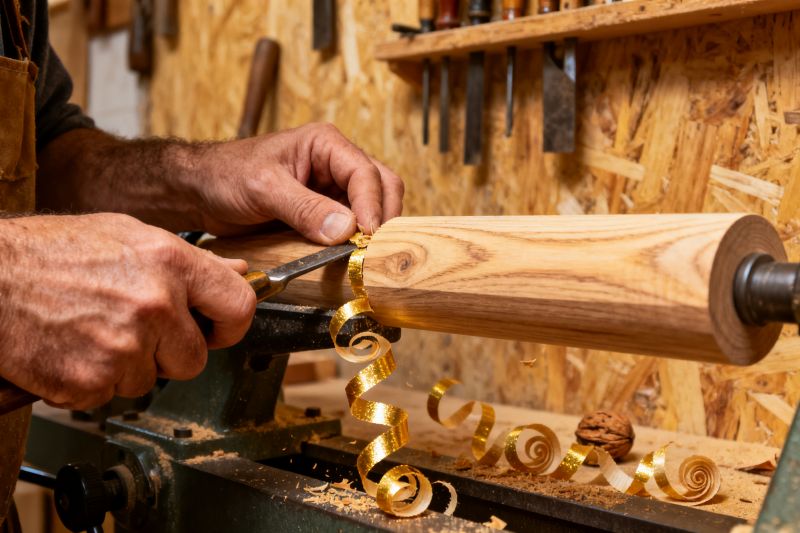
tep into the workshop of Padoin, tucked away in a narrow street in Treviso, and you won't see a single digital screen. What you will see is a 78-year-old craftsman named Giovanni, his hands moving with the kind of precision that only comes from five decades of repetition. He's shaping a piece of walnut into what will eventually become a chair leg, and he doesn't measure—he feels. "The wood tells you where to stop," he says, not looking up. This is the Padoin way: quiet, deliberate。and almost stubbornly analog.I first encountered Padoin through a Milanese architect who refused to furnish a client's library with anything else. She showed me a sample—a simple oak shelf bracket, nothing fancy. But the joinery was flawless。the grain matched across pieces in a way that suggested the wood had been chosen plank by plank. That's the thing about Padoin: the brand doesn't advertise, doesn't exhibit at trade fairs, and has no social media presence. Its reputation travels through word of mouth, from one architect to another, one restorer to a collector. In an industry obsessed with scale and speed, Padoin has built a quiet empire on the opposite principles.The company's roots go back to 1952, when Giovanni's father opened a small carpentry shop supplying local churches with pews and confessionals. Over the decades, Padoin shifted toward high-end residential furniture, but the production model stayed the same: small batches, hand tools。and a deep reluctance to compromise. Today, the workshop employs just eleven people, including Giovanni's daughter, who handles clients. She tells me they turn down more projects than they accept. "If someone wants a hundred identical tables in three months, we're not the right fit," she says with a shrug. "We'd rather make ten tables that outlive us."
What makes Padoin's approach stand out isn't nostalgia for its own sake—it's the practical outcome. A Padoin dining table, for instance。uses traditional mortise-and-tenon joints reinforced with wooden pegs, no metal screws or brackets. The finish is a blend of beeswax and linseed oil, applied by hand in seven thin layers. The result is furniture that can be repaired, not just replaced. I've seen a forty-year-old Padoin cabinet that had been dropped during a move;a local restorer fixed it in two days because the joinery was still intact. Try that with particleboard and glue.
There's a lesson here for anyone who cares about longevity, whether in furniture or in business. Padoin doesn't chase trends or growth for its own sake. It operates at a human pace, and that pace is its competitive advantage. The workshop's order book is full for the next eighteen months。and the waiting list includes names you'd recognize from design magazines. Yet Giovanni still sweeps the floor himself at the end of each day. "The floor is where you see the truth," he says, pointing to a pile of walnut shavings. "If the shavings are fine and even, the cut was good. If they're ragged, something was rushed." In a world that rewards rushing, Padoin chooses the fine, even shaving—every single time.